
Porsche 959 for sale
1 car in stock right now, inspected in the European country where it is located, priced landed at a US port with the import paperwork done.
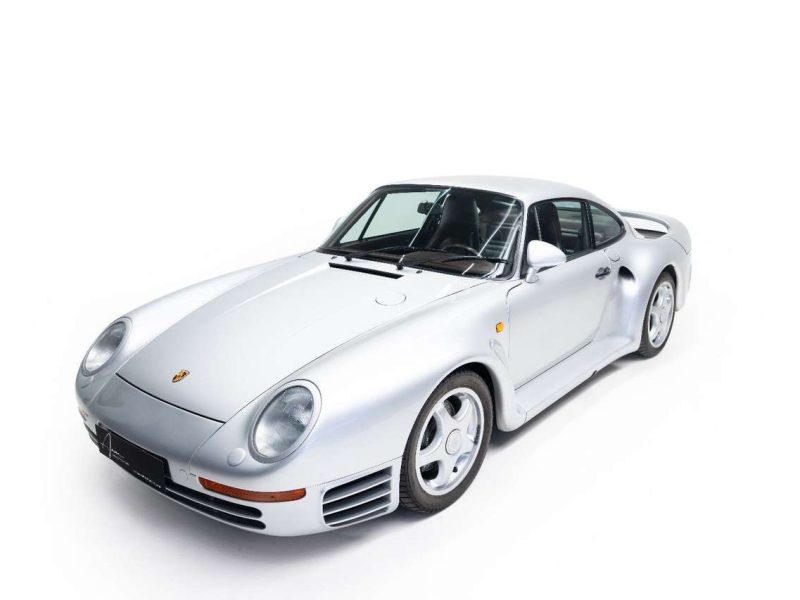
The Porsche 959 is the reason a particular American law exists. Porsche refused to surrender four cars for destructive crash testing, so the 959 was never federalised, and American owners — Bill Gates and Paul Allen among them — had cars impounded by US Customs for years. The Show or Display rule, adopted in 1999, was written to let technologically significant cars like this one into the country at all.
That fight is over. Every 959 is now more than 25 years old, which means it enters the United States like any other classic import: no Show or Display petition, no mileage cap, no NHTSA approval.
Why it matters
In 1987 the 959 had twin sequential turbochargers, electronically controlled all-wheel drive with variable torque split, adjustable ride height, hollow-spoke magnesium wheels with tyre-pressure monitoring, and 197 mph. Most of that reached ordinary cars fifteen years later. 337 road cars were built.
What the US never got
- The car, officially. It was never federalised for sale in the United States.
- Komfort and Sport versions, and the later 959 S.
- Cars that did reach America before 1999 arrived through Show or Display petitions or stayed in bond.
Eligible years (25-year rule)
Every 959 is eligible now. Road car production ran 1987–1988, with a final batch assembled from spares in 1992–1993.
What to look for
- Provenance above everything. With 337 cars, each one is documented. Porsche Classic can confirm a chassis and its history.
- The hollow magnesium wheels: original wheels are age-limited and Porsche has supplied replacements. The wheel question is a real cost and a real safety item.
- Hydraulic systems: the ride-height and damper systems are 959-specific and expensive.
- Service history: the engine is a motorsport-derived flat six. There is no cheap specialist for it.
- Standing time: many 959s have very low mileage and have sat for years, which is its own problem, not a virtue.
Typical landed price
Europe: around €2,100,000 for a documented low-mileage car. Landed at Baltimore with duty at the rate in effect on entry: around $3,082,000, or $3,083,000 to Long Beach.
Registration notes
- No Show or Display needed. At over 25 years old the car is exempt from federal safety standards on form HS-7, and from EPA emission standards on form 3520-1 at over 21 years in original configuration. The 1999 rule is history for this car, not a requirement.
- California: built after 1967, gasoline; CARB lab certification applies, not guaranteed.
- Title: US title from Salvage Motors LLC, issued from the CBP entry package.
- Insurance and transport: at this value, enclosed transport and agreed-value marine cover, not the standard policy.
Our take
At this level the car is bought on its file, not on its photographs: chassis documentation from Porsche Classic, the wheel history, and a physical inspection by a 959 specialist before anything moves. We arrange all three before the car leaves Europe.
FAQ
Was the Porsche 959 ever legal in the United States?
It was never federalised. Porsche declined to supply cars for destructive crash testing, so no 959 could be imported for road use, and some privately imported cars were impounded. The Show or Display rule of 1999 was created largely in response.
Do I still need Show or Display to import one?
No. Every 959 is now over 25 years old, so it is exempt from federal safety standards on form HS-7 and enters as a normal classic import, with no mileage restriction.
How many were built?
337 road cars, plus prototypes and competition versions.
Browse Porsche 959 listings Start a custom search
The 959 is the famous case: see the Porsche 959 and the law America wrote for it for how Show or Display and the 25-year rule differ.