
Renault 4 for sale
5 cars in stock right now, inspected in the European country where they are located, priced landed at a US port with the import paperwork done.
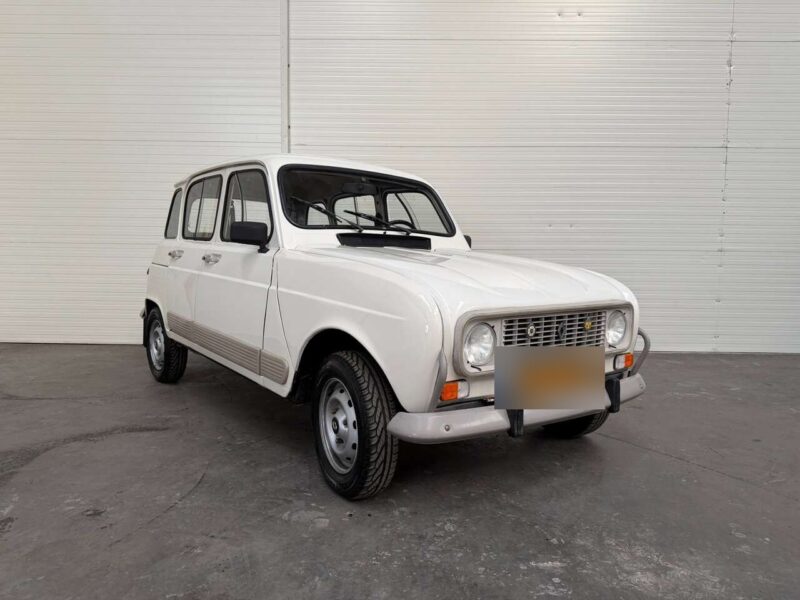
1988 Renault 4 GTL (restored)
duty at rate in effect

1987 Renault 4 TL
duty at rate in effect
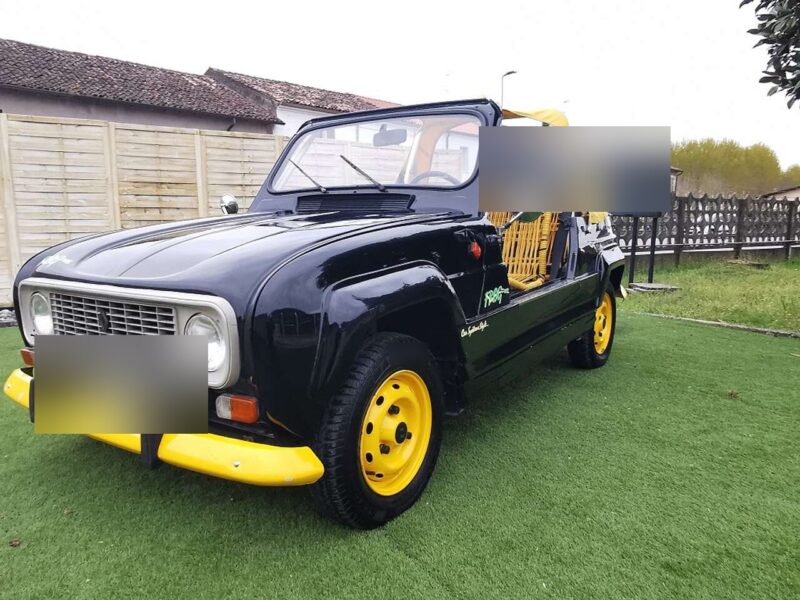
1987 Renault 4 950 Frog
duty at rate in effect

1984 Renault 4 Sinpar 4×4
duty at rate in effect
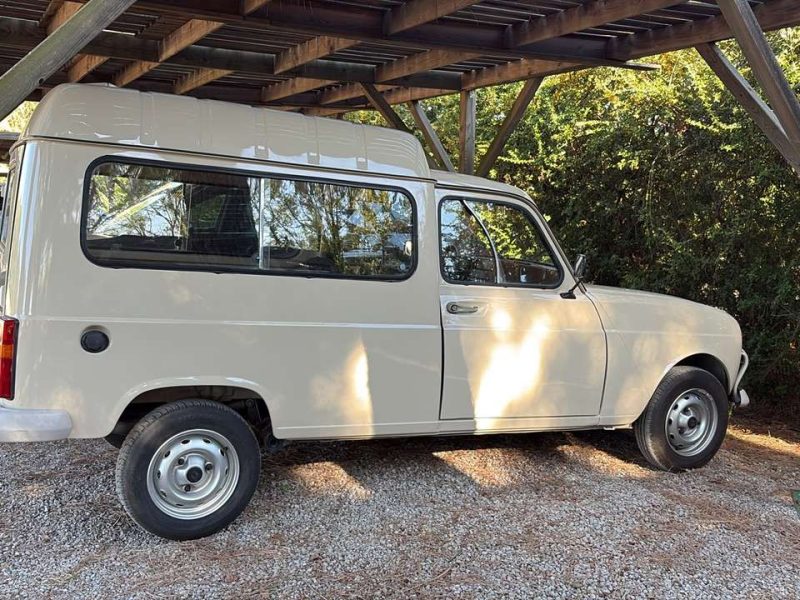
1984 Renault 4 F6 Van
duty at rate in effect
The Renault 4 (1961–1994) is the front-wheel-drive, torsion-bar hatchback that France used for everything: more than eight million were built, in saloon, van and four-wheel-drive Sinpar form. Renault’s US range of the period ran from the Dauphine to the R5 Le Car, and the R4 is effectively absent from American roads. Every one of them is now old enough to import.
Why Americans want it
It is the cheapest way into a genuinely characterful European classic: a dashboard gear lever that comes straight out of the firewall, a soft long-travel ride from torsion bars, a roll-back roof on some versions, and parts that are still made. A good R4 costs less than a used pickup and draws a bigger crowd.
Versions worth importing
- TL and GTL: the standard saloons, 845 cc and 1,108 cc, 34 to 46 hp.
- Sinpar 4×4: the four-wheel-drive conversion, rare and the most sought-after.
- Special editions such as the Italian-market Frog and the late Clan and Savane.
- F4 and F6 vans: the high-roof fourgonnette. Note the duty point below.
Eligible years (25-year rule)
Cars built up to 2001 are eligible now, which covers the entire R4 run, since production ended in 1994.
The van duty trap
A saloon R4 is a passenger car under heading 8703 and pays the passenger-car rate. An F4 or F6 van, with no rear seats and panelled sides, is a goods vehicle under heading 8704 and pays 25% duty, which on a cheap car is a large share of the landed price. We state the classification on every listing and price it accordingly, rather than discovering it at the port.
What to look for
- Rust: the chassis rails under the floor, the torsion bar tubes, the front crossmember and the rear suspension mounts. Everything else is cosmetic by comparison.
- Torsion bars: the rear ones sag and the wheelbase differs slightly left to right by design, which surprises people.
- Engine: the Billancourt and Cléon fours are simple and long-lived; look for oil leaks and a tired clutch.
- Brakes: many cars still have drums all round; check the lines, which rot where they pass the sills.
- Documents: chassis plate, EU registration. On a cheap car, good paperwork is worth more than good paint.
Typical landed price
Europe: roughly €6,000–€18,000, from a sound driver to a restored Sinpar or a rare edition. Landed at Newark or Baltimore with duty at the rate in effect on entry: roughly $16,000–$33,500 for a saloon. A van pays 25% duty instead, which adds roughly a tenth to the landed price. Shipping two or three in a shared container lowers the cost per car.
Registration notes
- California: built after 1967, gasoline; CARB lab certification applies, not guaranteed.
- Fuel: gasoline.
- Title: chassis number on older cars, 17-character VIN on the last ones. US title from Salvage Motors LLC.
Our take
On a car this cheap the freight and customs decide the deal, so buy the best one you can find rather than the nearest one, and ship it alongside another car. A Sinpar 4×4 or a documented special edition holds its value far better than a plain TL.
FAQ
Can a Renault 4 be registered in the US?
Yes. At 25 years or older it is exempt from the federal safety and emission standards, and each state then titles it on the CBP package and the foreign registration.
Why do vans cost more to import?
A panel van with no rear seats is classified as a goods vehicle under HTS 8704 and pays 25% duty instead of the passenger-car rate.
Are parts available?
Yes. The R4 was built for 33 years in large numbers and mechanical and body parts are still produced in France and Spain.